Writing question
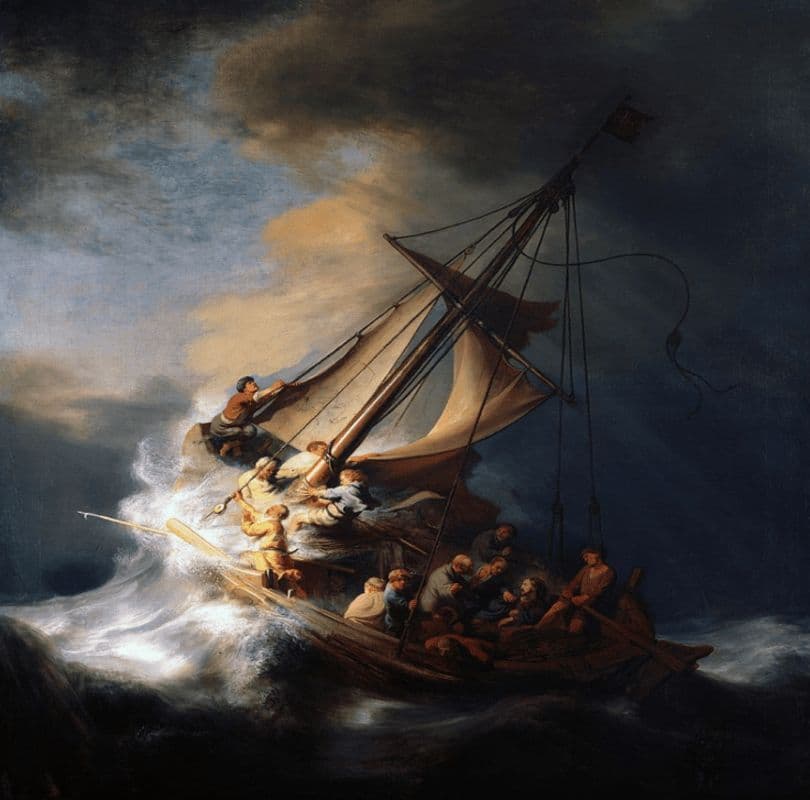
Write a creative response to this picture:
The Storm on the Sea of Galilee Rembrandt (1633)
Write from the point of view of the artist about your feelings and thoughts when painting this picture.
Practise this exact question with personalised feedback on your writing.
Understand the task
Write as Rembrandt planning and making the painting, not as a passenger in the boat. Connect visible choices of light, colour and composition to the artist’s thoughts and emotions.
- visual interpretation
- artistic voice
- reflection
- imagery
Requirements to keep in mind
Use the artist’s viewpoint; refer closely to The Storm on the Sea of Galilee.
Plan your response
- Speak in the artist’s first-person voice.
- Describe actual features of the painting.
- Explain choices of colour, light and composition.
- Connect each artistic choice to a feeling.
- Show how the artist hopes viewers will respond.
Check your response against the task requirements. Leave time to review sentence clarity, punctuation and spelling.
Original atoply example response
Written by atoply, not an official school answer or mark scheme. Other successful responses are possible.
Reveal example and teaching notes
The storm exists only in my imagination, yet as I lift my brush I can almost hear the furious waves. I want the viewer to feel that the boat may overturn at any moment.
First, I spread dark paint across the canvas. The sky must appear immense, heavy and threatening, so I mix blue with brown until the clouds resemble bruises. Against this gloom, I leave one space for the light. Without it, the scene would be nothing but despair.
I turn to the boat. Its mast leans dangerously, and the sail strains against the wind. I paint the people carefully: a man climbing upwards, another pulling at the ropes, others huddled low, their faces drawn with fear. Each figure must tell a different part of the story.
As I work, I wonder what I would do if I stood among them. Would I grip the nearest rope? Would I look to the sky for help? The thought makes my own hands tense around the brush.
At last I add the white crests of the waves. They seem to leap straight from the darkness towards the helpless vessel.
I put down my brush and step away. The boat is small, the danger enormous, but the beam of light remains. I hope anyone who studies my painting will notice both the terror of the storm and the possibility of courage.
Learn from the example
- The voice connects experience with thoughts or feelings, making the response personal rather than a detached report.
- Develop the link between a particular detail and the narrator's reflection. Keep the requested diary, recount or monologue form in your own answer.